TLP Community
Passion Project
Fantastical Microscopic Worlds
This interdisciplinary project invites learners to explore and build imaginative microscopic civilizations that blur the lines between reality and fiction.


Check out our inspiration for this project:
Parental Advisory: AntMan is rated PG13 - please review prior to showing to your children

Ant-Man and the Wasp: Quantumania
Source: YouTube (https://www.youtube.com/watch?v=WlO2JFVPyf4)
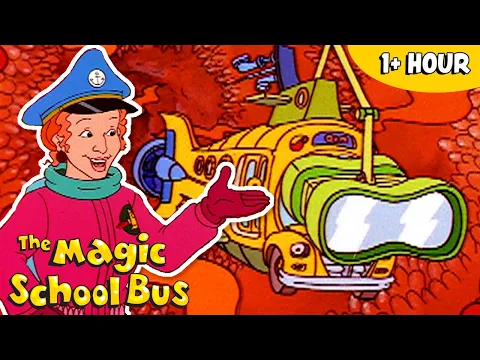
The Magic School Bus
Source: YouTube (https://youtu.be/9rxNlQPh3Ns?si=kvjRKD_iUUsY63-X)
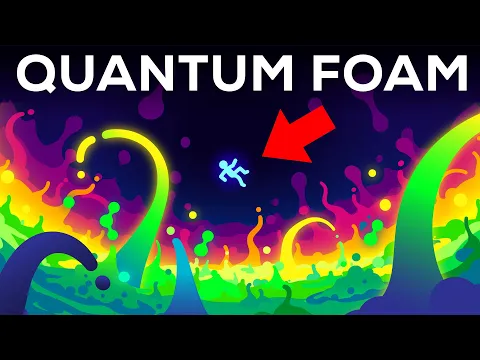
I shrink 10x every 21s until I'm an atom - The Micro Universe
Source: YouTube (https://www.youtube.com/watch?v=rn9dkV4sVYQ)
Let’s Travel to The Most Extreme Place in The Universe
Source: YouTube (https://www.youtube.com/watch?v=FfWtIaDtfYk&t=141s)

Passion Project Pilot Program
Testing Phase
Developed by:
Alicia Robson
Professor,
Learning Strategist
Inspired by the idea of shrinking into a hidden world, like in Ant-Man or The Magic School Bus, students will create entire societies at the cellular or molecular level. Each world will be rich with its own biology, culture, technology, and geography, integrating subjects across the curriculum through a blend of creativity, inquiry, and design.
Students invent and develop a microscopic fantasy world, incorporating multiple subjects to deepen learning, spark curiosity, and develop real-world skills. These micro-worlds could exist inside a single cell, on a speck of dust, within a raindrop, or hidden in the roots of a blade of grass. The creatures that inhabit them, their culture, environment, and technologies are entirely up to the student's imagination, grounded in real scientific and creative principles.
A Note for Educators & Support Roles
Core Pedagogical Learning Outcomes
Encourages deep thinking through open-ended exploration
Integrates creative expression with scientific and technical knowledge
Builds autonomy through student-directed project design
Offers opportunities for specialization or collaboration
Challenges students to think across disciplines and connect ideas
These passion projects are intentionally designed to be flexible, student-driven, and interdisciplinary. The project ideas provided are meant to serve as inspiration rather than a prescribed pathway. Students should be encouraged to pursue their interests, strengths, and curiosities while demonstrating the intended learning outcomes.
Learners may choose to showcase their understanding through a wide variety of formats, including written work, artwork, physical models, digital media, videos, coding projects, music, performances, presentations, or other creative approaches. We encourage you to support student choice, recognizing that gifted learners often demonstrate deep understanding in diverse and unconventional ways.
The emphasis should remain on the quality of inquiry, creativity, critical thinking, and application of knowledge rather than on the format of the final product. Allowing students the freedom to explore, experiment, and make meaningful connections across disciplines is central to the purpose of these passion projects.
“The World Premier”
(Initial Project)
Project:
Create a foundational “World Encyclopedia” that outlines the major elements of your imagined microscopic civilization. This includes scientific inspirations, ecosystem structure, species, culture, geography, and technological possibilities. Use real-world research to inform your fantasy elements.
Skills:
Research and inquiry
Scientific reasoning and application
Creative worldbuilding and systems thinking
Citation and academic integrity
Brainstorming and planning
Extension:
Present your world in a “World Design Dossier” that includes visuals, concept maps, and a bibliography. This dossier will be referenced throughout future mini-projects across all subject areas.


Project Components
Begin here, answering as many of the questions below as you can about your new world.
Don't worry if you're having a hard time with some ideas! You can move on to the more specific projects at any time, and come back to these questions as you dream up your universe!
Microscopic Setting Definition
Where does your world exist? (Inside a water droplet, on a leaf, between skin cells?)
What scale are you working at? (Microns, nanometers?)
What are the environmental conditions? (Temperature, moisture, terrain types?)
Inhabitants & Society
What kinds of creatures live there? Are they based on real cells, bacteria, or newly imagined life forms?
Do they live in groups? What is their culture, language, or way of life?
What values, resources, and technologies shape their civilization?


Environmental Structure
What ecosystems, climate zones, or resource flows define the world?
Are there weather patterns? Natural disasters? Regional conflicts?
Scientific Inspirations
Identify real scientific principles (biology, chemistry, physics) that helped inspire your world
Examples: flagella for movement, osmosis as transport, chemical reactions for energy
Worldbuilding Brainstorm
Include maps, diagrams, creature sketches, and sample materials
Use a “micro lens” to think about how the scale impacts daily life: food, transportation, time perception, social interactions
Annotated Bibliography or Inspiration List
Include at least 3 - 5 sources (books, articles, videos, scientific websites)
Document which aspects of your world each source helped inspire (e.g., cell walls, architecture, tardigrades, resilience)
Reflection and Planning
What topics are you most excited to explore in future projects (e.g., fashion, government, coding)?
What questions remain unanswered that you could investigate through other subject areas?
Optional Tools and Formats:
Use Canva, Google Docs, or a sketchbook for organizing ideas
Create a concept map linking biological, cultural, and geographic features
Add sticky notes or color-coded tags to show which subject area connects to which idea
Feeling Inspired?
When you have a foundational little world of ideas generated, and you feel like you are ready to create, simply pick from your favourite subjects below to keep growing your universe!
SCIENCE


Quantum Shrink Theory
Project: Explore how a person from the human world might shrink to enter these realms and model theories of scale and dimension
Skills: Scale modeling, atomic theory, mass and density calculations, quantum mechanics concepts
Extension: Create a “shrink tech” blueprint, a comic explaining the science fiction, or a short video demonstrating the physics through models


Bio-Luminescence (Chemistry)
Project: Invent glowing building materials made of fantasy bio-compounds
Skills: Molecular structure, chemical bonding, photoreaction
Extension: Build molecule models or mock chemical formulas for their materials


Microscopic Biomes and Beings
Project: Design microscopic creatures based on real-world species
Skills: Anatomy of cells, taxonomy, biological systems, and ecological interdependence
Extension: Create anatomical diagrams and evolutionary charts showing how each species developed to thrive in its micro-environment. Feel free to use AI for this!
Tip: If generating an image, try this prompt: “Ultra-high detail, environmental storytelling, whimsical realism, cheerful atmosphere, scientifically inspired fantasy, educational worldbuilding, hundreds of unique creatures each with distinct jobs and personalities, sustainable architecture, vibrant natural colors, layered ecosystems, rich biodiversity, cinematic lighting, enormous sense of scale, hidden details everywhere, encourages curiosity and exploration, cross-disciplinary learning opportunities, suitable for students studying science, engineering, geography, ecology, history, economics, language arts, mathematics, visual arts, and design.”


Cellular Society Design (Biology)
Project: Create a civilization where each creature within a species is modeled after a type of real-world cell (neurons, red blood cells, etc.).
Skills: Cellular structure & function, systems biology, taxonomy.
Extension: Build an ecosystem web showing relationships between cell species.
Ecosystems (Biology)
Project: Develop a theory and model for shrinking humans to a microscopic scale
Skills: Particle physics, scale conversion, force, mass, time distortion
Extension: Create a conceptual blueprint or short animated explainer showing the shrinking process in action
Humans… or Aliens? (Physics)
Project: Design a functioning microscopic ecosystem with interacting species
Skills: Ecology, food chains, adaptation, symbiosis
Extension: Create a “field guide” of species, including roles in the ecosystem, life cycles, and survival behaviors
STEM & ENGINEERING


Nano-Material Alchemy
Project: Create fictional but scientifically inspired building materials, fuels, or atmospheres for these worlds
Skills: Chemical properties, reaction types, states of matter, compound synthesis
Extension: Develop a “materials catalog” complete with chemical symbols, mock lab reports, and sample structures
Nano-Architecture (Engineering/Design Tech)
Project: Create transportation systems for microscopic environments
Skills: Design thinking, mechanical engineering, prototyping
Extension: Build working models of vehicles using simple machines and test them on different surfaces
Take the Nano-Train (Engineering and Design)
Project: Design and 3D print models of microscopic buildings, transit systems, or entire cities.
Skills: 3D modeling software, scale awareness, structural design.
Extension: Host a micro-world architecture exhibition.

Mico-Sims (Computer Science)
Project: Program basic AI creatures to simulate life in the microscopic world
Skills: Logic trees, basic coding (Scratch, Python), simulation
Extension: Develop an interactive game or digital simulation showing creature behaviors in different scenarios
MATH


Micro-Market Math
Project: Design a functional economy with pricing systems, budgets, and supply-demand modeling for microscopic goods
Skills: Financial literacy, percentages, data tables, ratios
Extension: Run a mock market simulation using fictional items and currency, complete with receipts, budgeting sheets, and trade analysis
Probability and Predators
Project: Design microscopic buildings that must remain structurally sound and space-efficient
Skills: Geometry, symmetry, volume, area
Extension: Build paper or 3D-printed prototypes and calculate floor area, material needed, and optimal shape for energy efficiency
Architectural Angles
Project: Use probability to model survival scenarios in an ecosystem with predators, prey, and limited resources
Skills: Probability, statistics, risk modeling
Extension: Create a board game or digital simulation that incorporates random events (like droughts, predators) and probability-based outcomes


Microscopic Population Dynamics
Project: Track and model the growth of a micro-population using exponential functions or sequences
Skills: Algebra, functions, exponential growth, graphing
Extension: Compare different population control strategies and graph results under various conditions (resource limits, disease, etc.)
SOCIAL STUDIES
HUMANITIES & LANGUAGE ARTS
Micro-Tales Anthology (English Language Arts)
Project: Write a collection of short stories or a novella about the creatures in these microscopic worlds.
Skills: Narrative development, worldbuilding, editing, peer feedback.
Extension: Bind the stories into a handmade book or create an audiobook version.
Microscopic Mythology (Social Studies & Mythology)
Don’t Read My Journal!
(English Language Arts)
Project: Create origin myths, religions, belief systems, and cultural rituals for the microscopic civilizations.
Skills: Comparative mythology, culture-building, symbolism.
Extension: Include visual storytelling, such as murals, cave art, or temple architecture.
Project: Write a collection of stories or journals from the perspective of micro-world inhabitants
Skills: Creative writing, voice and perspective, genre exploration
Extension: Compile stories into a digital anthology or record an audiobook featuring character voices


ARTS & DESIGN

Mixed Media World-Building (Visual Arts)
Project: Illustrate the terrain, characters, cities, and technology of these worlds.
Skills: Sketching, digital art, diorama building, miniature painting.
Extension: Display as an art show or scan and turn into a digital storybook.
Sound of the Small (Music)
Project: Compose music or soundscapes for micro-world cultures and events
Skills: Acoustics, music composition, thematic sound design
Extension: Compose and record theme songs, ceremonial music, or environmental soundscapes
Do My Wings Look Big in These? (Fashion/Textiles, Visual Arts)
Project: Compose theme music or soundtracks for different micro-communities using handmade or digital instruments.
Skills: Music composition, acoustic engineering, instrument-making.
Extension: Create fictional musical instruments and perform a piece.
On Fridays, We Wear Fur (Fashion/Textiles, Visual Arts)
Project: Design insect-inspired fashion for micro-creatures based on their species
Skills: Textile design, color theory, anatomical inspiration
Extension: Host a “microscopic fashion show” using sketches, mood boards, or small-scale models
Project: Design climate-specific and culturally significant clothing for different micro-species
Skills: Functional design, symbolism, pattern-making
Extension: Create illustrated fashion plates or sew miniature garments using recycled materials
Soundscapes (Music)


INTERDISCIPLINARY
Interdimensional Diplomacy (Civics & Ethics)
Project: Develop political structures, laws, or ethical dilemmas for this world, how would these societies handle scarce resources, trade, or peacekeeping?
Skills: Political theory, philosophy, ethics in technology.
Extension: Simulate a “United Cells Assembly” with debates and treaties.
Microverse Documentary (Media & Communication)
Project: Script, film, and edit a documentary-style video as if you're a scientist exploring this world for the first time.
Skills: Scriptwriting, video production, and visual storytelling.
Extension: Include interviews with fictional experts or “citizens.”
Project: Program or storyboard basic AI creatures that live in the world and have certain behavioral algorithms.
Skills: Scratch or Python basics, logical thinking, storytelling through code.
Extension: Turn their story into an interactive visual novel or simple game.
Home Economics (Cooking & Baking)
Project: Invent recipes and cooking methods using materials available in a microscopic environment
Skills: Food science, measurement, nutrition
Extension: Write a fantasy micro-cookbook or create miniature “sample dishes” using edible materials


Microland Geographer (Geography)
Project: Develop detailed maps and terrain models of different micro-regions (volcanic spore plains, cellular coral reefs, etc.).
Skills: Topographic mapping, cartography, compass rose & scale bar.
Extension: Build a layered terrain model or digital GIS map.
Teeny Tiny Farmers (Agriculture)
Project: Study and document the cultural practices, belief systems, artifacts, and social behaviors of a fictional microscopic civilization
Skills: Cultural anthropology, ethnographic observation, symbolic interpretation, social structure analysis
Extension: Create an ethnographic field report, photojournal (illustrated), or documentary-style video detailing the society’s rituals, tools, traditions, and origin myths
Zoning (Geography)
Project: Develop a micro-farming system that sustains your creatures using symbiotic or hydroponic principles
Skills: Sustainable agriculture, food webs, interdependence
Extension: Build a working terrarium or diagram of food production cycles and pest control
We Can Vote Too!
(Law and Governance)
Project: Map the terrain and natural zones of a microscopic region or civilization
Skills: Cartography, biome classification, resource mapping
Extension: Create a 3D relief map or digital GIS-style map with labeled zones and infrastructure
Legally Tiny (Civics and Ethics)
Project: Write a constitution and justice system for a microscopic society
Skills: Rule-making, civic structures, legal reasoning
Extension: Stage a mock trial or legislative session based on a fictional ethical dilemma
Cultures of the Invisible
Project: Develop laws for the micro-society
Skills: Government structure, ethics, rights and responsibilities
Extension: Write fictional court transcripts or create a simulated “UN Assembly of Micro-Cultures” debate